
Visitors can enter the Native Habitat Garden on Ridge Road near the intersection with Easy Way and The Fairway. The garden, which spans both sides of Ridge Road, offers woodchip paths for visitors and provides environmental benefits as well as educational opportunities.
An ecologically diverse ornamental landscape, the garden creates a native habitat for birds, butterflies, and insects. It helps to educate the public about the importance of biodiversity and the value of sustainable gardens that support pollinators and other wildlife. Plants were selected to add visual interest throughout the year and include more than 200 herbaceous native flowering plants, ground covers, and native deciduous, semi-evergreen, and evergreen shrubs and trees, along with approximately 1,200 native plant plugs. Many of these plants provide nectar and pollen for pollinators, serve as larval hosts for butterflies, and offer berries to feed the birds.
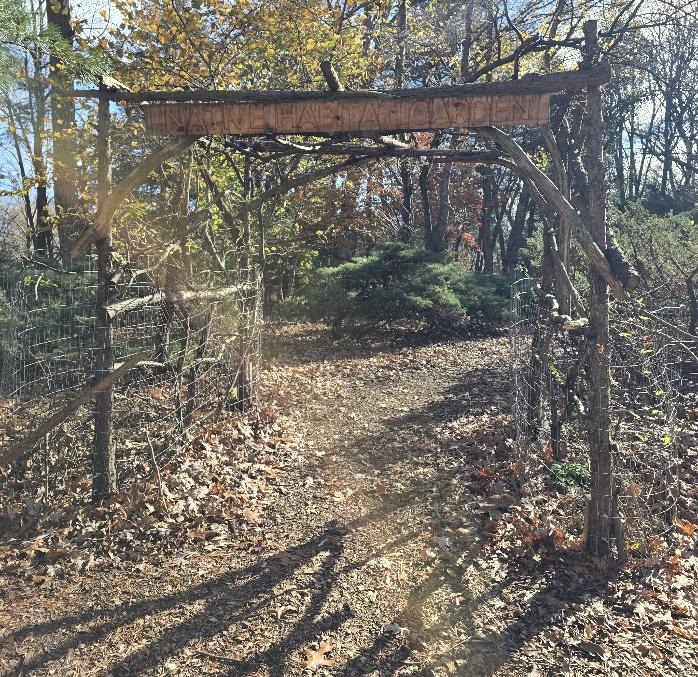
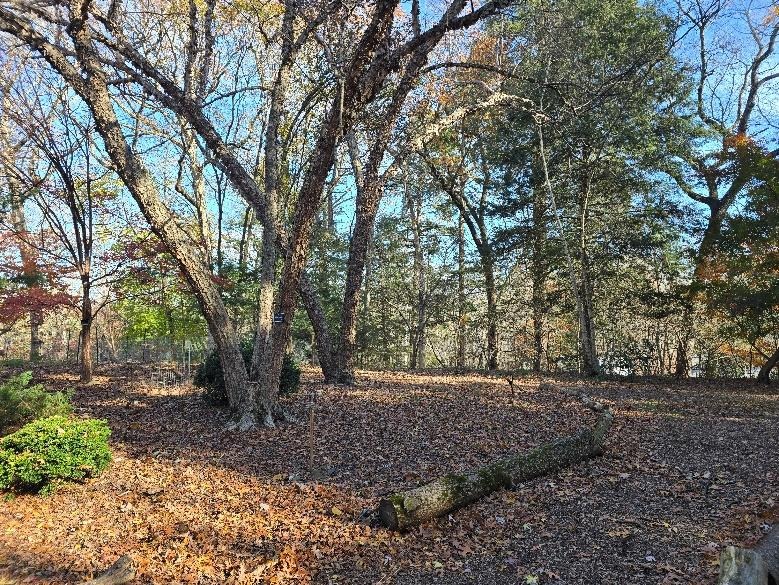
The woodchip paths wind through a 20,000 square foot forested area among numerous existing native trees and shrubs such as Eastern Redbud, American Beech, Eastern Hemlock, Bottlebrush Buckeye, Summersweet, and Carolina Silverbell. A beautiful Paperbark Maple, an exotic tree known for its stunning exfoliating bark and vibrant fall colors, welcomes visitors to a second entrance to the garden on Ridge Road, flanked by three large Rhododendron maximum, a native species found in the northeast, also known as the Great Laurel.
Scattered throughout the garden are native shrubs that attract pollinators, provide food for birds, and provide winter interest, such as Witch Hazel (Hamamelis), Pepperbush (Clethra alnifolia), Red Buckeye Aesculus pavia) and Blueberry Bush (Vaccinium corymbosum).
The garden includes several native species of Rhododendron, including vicosum (Swamp Azalea), atlanticum (Coastal Azalea), periclymenoides (Pinxtsterbloom Azalea), arborescens (Sweet Azalea), calendulaceum (Flame Azalea), prinophyllum (Roseshell Azalea), and prunifolium (Plumleaf Azalea).