
John and Dorothy Knippenberg specialized in azaleas and rhododendrons, and our collection includes more than 200 colorful azaleas planted by the Knippenbergs, which can be viewed along Azalea Way. These include hybrid azaleas bred by Joseph Gable (1886-1972), who produced azaleas with finer flowers and hardier plants at his nursery in Stewartstown, Pennsylvania. Among them are ‘Corsage’, ‘Herbert’, ‘Rose Greely’, ‘Springtime’, and ‘Stewartstonian’.
Our collection also includes hybrids created by Benjamin Y. Morrison (1891-1966), who strived to create winter-hardy azaleas with large, colorful flowers. An example is his hybrid ‘Geisha’, whose flowers are white with moderate reddish-purple stripes. One of our oldest azaleas, “Geisha’ can be seen on Ridge Road opposite the Native Habitat Garden.
Most of the original azaleas planted by the Knippenbergs remain in our collection. They have been supplemented with new hybrids added to the collection in recent years, including ‘Delaware Valley White’, ‘Blaauw’s Pink’, ‘Garden State Glow’, Girard’s Hot Shot’, ‘Mother’s Day’, ‘Renee Michelle’, and ‘Popsicle’. Planted on the downhill side along Azalea Way facing Laurel Pond, they create a colorful palette during the spring. Most azaleas bloom in the spring, around May.
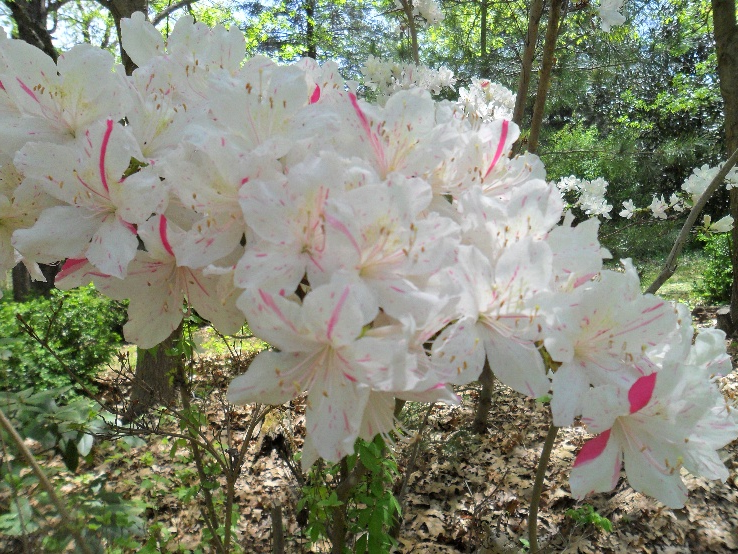
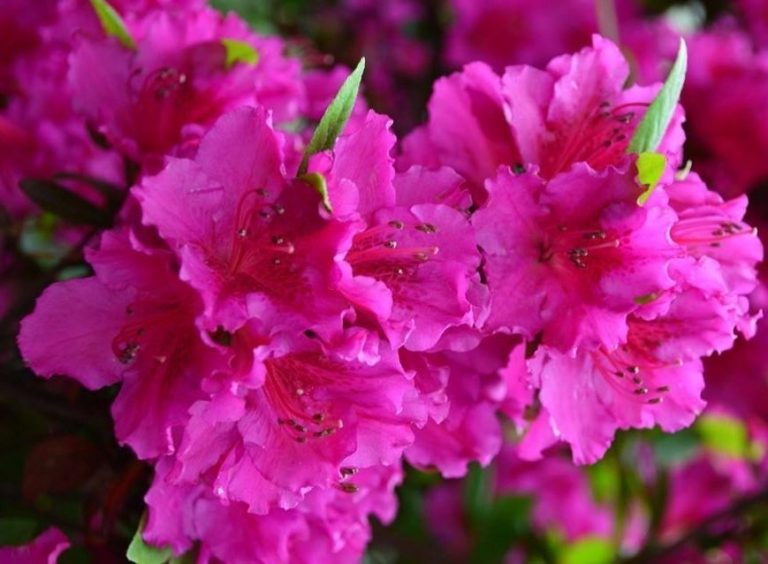
The collection includes several hybrid azaleas selected as Rhododendron of the Year (ROY) by the American Rhododendron Society. Azaleas are flowering shrubs in the genus Rhododendron. The award winners are selected for their excellent foliage and plant habit, beautiful flowers, and disease and pest resistance. Included among our azalea collection are ‘Herbert’ (2024), Stewartstonian’ (2019), ‘Gerard’s Fuchsia’ (2004 and 2017), ‘Gibraltar’ (2005 and 2006), ‘Rose Greely’ (2005), and the native species periclymenoides (2020), commonly known as Pinxterbloom Azalea.
‘Laurelwood Sunset’ Azalea
Our own ‘Laurelwood Sunset’ evergreen azalea can be seen at several locations in the arboretum, including the hillside along Azalea Way facing Laurel Pond, the Sensory Garden, and the South Rock Garden.
In 2015, Dr. Al Fitzburgh, past President of Friends of Laurelwood Arboretum and past President of the Tappan Zee Chapter of the American Rhododendron Society, offered his unnamed evergreen azalea, which he hybridized (‘Cherokee Chief’ selfed) in 1975 at his home in Caldwell, to Laurelwood Arboretum for naming and propagation. Our application for the registration of the name, ‘Laurelwood Sunset,’ was approved by the Royal Horticultural Society, which serves as the International Cultivar Registration Authority (ICRA) for genus Rhododendron.
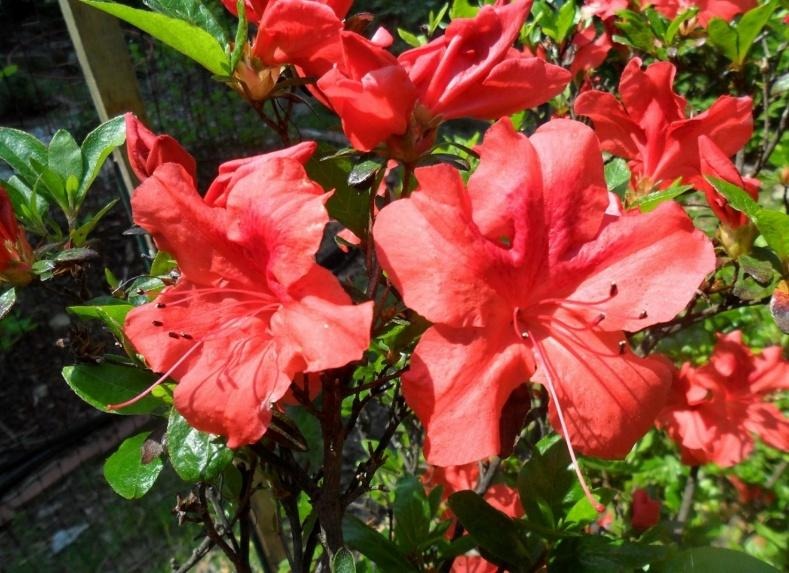
Laurelwood’s propagation team has rooted stem cuttings from the new azalea and raised them in the propagation greenhouse until the plants were ready to be planted in the arboretum, which now includes more than twenty brightly colored ‘Laurelwood Sunset’ azaleas.
Azaleas vs. Rhododendrons – How to Tell the Difference
All azaleas are rhododendrons, but not all rhododendrons are azaleas. Azaleas and rhododendrons can be distinguished by several key characteristics, including the shape of their flowers, the number of stamens, and their leaf characteristics.
◄ Flower Shape: One of the most noticeable differences between azaleas and rhododendrons lies in the shape of their flowers. Rhododendron flowers typically have a bell-shaped form, while azalea blossoms tend to be tubular or trumpet-shaped.
◄ Flower Number: Azaleas have one flower per stem, and rhododendrons have clustered blooms at the end of each stem.
◄ Number of Stamens: Azaleas typically have five stamens per bloom, while rhododendron flowers have ten or more stamens.
◄ Leaf Characteristics: Although both azaleas and rhododendrons are evergreen plants, their leaves often have subtle differences. Rhododendron leaves are typically larger and broader, with a leathery texture. Azalea leaves tend to be smaller, narrower, and softer.